Christian Plewnia, M. Sc. RWTH

About me

Interests

  • Managing (cloud) computing infrastructures and their costs
  • DevOps & compute infrastructure automation
  • Continuous integration, continuous delivery, continuous deployment
  • Software architectures and, especially, microservice architectures

Industry cooperations

  • 2017–2023: Amadeus Leisure IT (formerly Traveltainment)

Activities

Academic education

  • 2019: M.Sc. in Management, Business and Economics; RWTH Aachen University
  • 2015: M.Sc. in Computer Science; RWTH Aachen University
  • 2012: B.Sc. in Computer Science; RWTH Aachen University
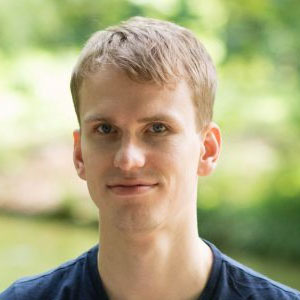
Picture of Christian Plewnia
Christian Plewnia
External PhD Candidate

Research projects

Cloud Service Selection and Cost Optimization

Selecting suitable cloud services and estimating future cloud costs for organizations with a large set of software services is a challenging task. To achieve this, one needs to understand all software applications’ cloud service configuration requirements. Further, one needs to estimate how the applications’ requirements change over time, e.g., due to scaling with a growing number of application users. Then, one needs to compare for different cloud providers the costs over time of setups matching the requirements. This task, if done manually, is laborious, error prone, and has to be repeated when the organization’s business or application requirements change.

Regression Test Optimization

"Software regresses when existing functionality stops working upon the change of the program. Thus, the importance of automatic regression testing is increasing; this is especially true for fast-evolving systems and continuous delivery done right. To stress functional behavior, the regression test suite and its execution time is, in general, large. Moreover, by definition, regression test suites are executed recurrently, and thus, the number of test cases greatly influences the execution time. However, a change has only a partial impact on the system, so we can choose to execute only relevant test cases (test selection). Similarly, we can permanently remove test cases that are irrelevant (test minimization). Last but not least, the order of the test cases can reveal regression errors faster (test prioritization)."
Scalable Distributed Data Processing with Microservices

Processing increasingly large amounts of data requires the underlying system to be scalable. A system can be designed to scale with the resources of a single computer using "shared-memory parallelization. Another approach is to scale with the number of computers by splitting up a large work package into smaller ones, distributing these smaller work packages, processing them, and then collecting and merging the result. Established frameworks for scalable distributed computing like Apache Hadoop and Apache Spark assist in realizing this. However, in order to fully profit from these frameworks, one has to stay within their ecosystem of supported programming languages and technology stacks. A recent trend in software architectures is to build and compose microservices rather than one monolithic system. This architecture approach yields the benefit that developers can choose the best-fitting programming languages as well as technology stacks individually for every microservice. This project aims for researching approaches to utilize microservices in distributed data processing scenarios."

Publications

Latest publications:

  • Christian Plewnia, Horst Lichter (2024)
    CICO2e: A Compute Carbon Footprint Estimation Tool Based on Time Series Data. In Kohei Arai (ed.) Intelligent Computing. SAI 2024. Proceedings of the 2024 Computing Conference, Volume 2, London, United Kingdom, Jul 11-12, Springer Nature Switzerland, Cham, Lecture Notes in Networks and Systems, Vol. 1017, ISBN 978-3-031-62277-9, 39-55.
    DOI PDF
  • Christian Plewnia, Horst Lichter (2023)
    Cross-provider Cloud Cost Calculation. In Simon Hacks, Jürgen Jung (eds.) 13th International Workshop on Enterprise Modeling and Information Systems Architectures (EMISA 2023), Stockholm, Sweden, May 11-12, CEUR-WS.org, CEUR Workshop Proceedings, Vol. 3397. PDF
  • Sebastian Geiss, Tim Jentzsch, Nils Wild, Christian Plewnia (2022)
    Automatic Programming Assessment System for Computer Science Bridge Course - An Experience Report. In 29th Asia-Pacific Software Engineering Conference (APSEC 2022), Japan (virtual), Dec 6-9, IEEE Computer Society, 527--536.
    DOI
More publications (8)

Supervisor for thesis projects

Completed thesis projects (28)

Latest completed projects:

More thesis projects supervised by me

Latest courses

Summer semester 2022

Winter semester 2021/2022

More courses supervised by me